High dividend investing: 3 common misconceptions
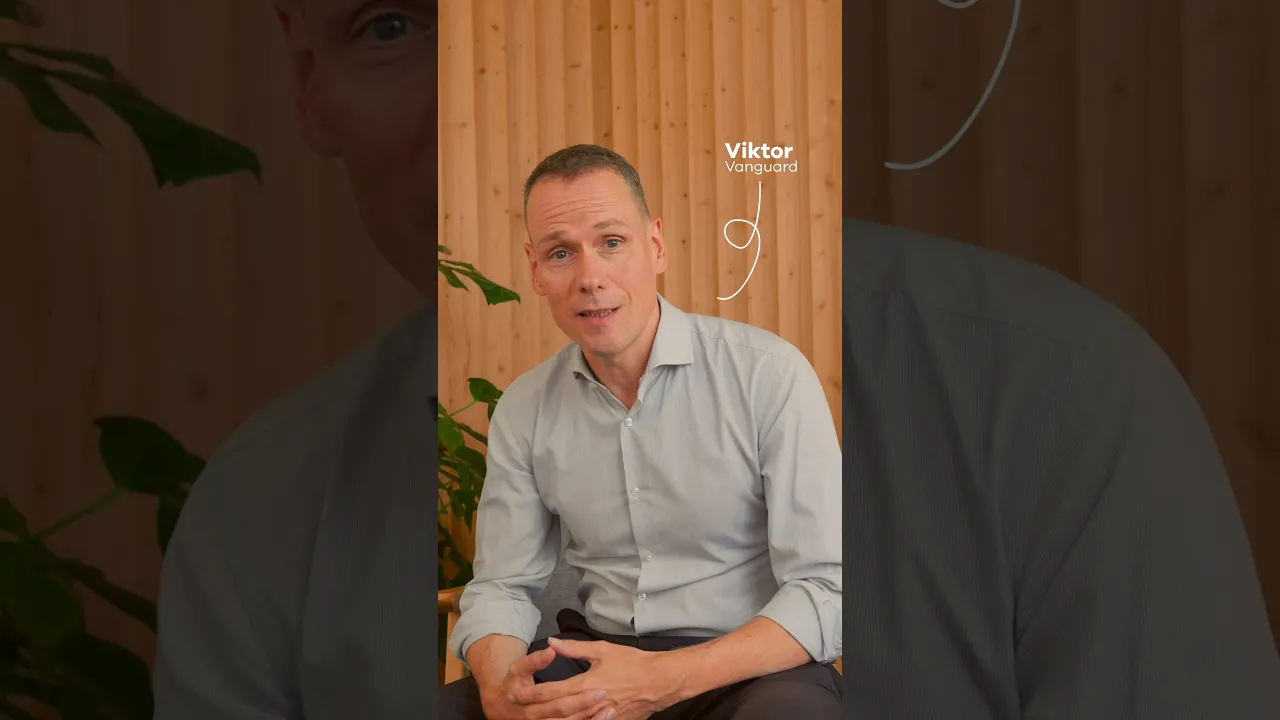
Regular cash payouts from companies sound appealing – especially when the dividends are high. But is a high dividend yield always a good sign? We asked Viktor from Vanguard to clear up a few common misconceptions about high-dividend ETFs (short for exchange-traded funds: funds that track an index containing shares or bonds, which you can buy and sell like a single share on a stock exchange).
First things first: What is a dividend?
The word dividend comes from the Latin dividendum, which means «that which is to be divided». Fittingly, a dividend is the part of a company’s profit that it pays out to its shareholders – when you own shares of a company, you receive a set amount for every share you own.
Companies pay dividends at specific intervals, typically either once a year, twice a year, or quarterly. Many European companies pay theirs around the second quarter of the year, while most US companies pay quarterly. With a global mix of companies, payouts spread more evenly across the year.
Why do companies share their profits?
If a company turns a profit, it must decide how to use it most effectively. A young, fast-growing company may keep most of its profit to grow its business by developing new products, hiring more employees, or expanding into new markets.
Once a company is established and turns a profit year after year, it might not need (or want) to reinvest all of it. So it shares part of the profit with its owners: the shareholders. For many companies, a regular dividend is also a way to show confidence in their business. And it also makes shares more attractive to certain investors looking for an income stream. Many companies do both: they keep some profit for growth and share the rest as dividends.
Read the dividend yield the right way
The dividend yield is the dividend that a company paid over the past 12 months, shown as a percentage of the share price. For example: if a company pays a 4 CHF dividend on a share that costs 100 CHF, that's a dividend yield of 4%. Sounds simple. But this is exactly where the first misconception starts.
Misconception 1: «The more a company pays out, the better»
Not necessarily. A dividend is only one way a company can use its profits. It can also put profits back into the business, for example into new products, research or expansion, which can help it grow over time. So a company that pays a small dividend, or none at all, isn’t automatically the weaker investment.
And a big payout isn’t always a sign of strength, either. If a company pays out more than it can earn in the long run, it may have to cut its dividend later.
If a company's share price falls sharply, but it hasn't cut its dividend yet, the yield goes up. So a very high yield can be a warning sign rather than a bargain, as the company may not be able to keep paying that dividend in the future.
It’s important to remember that dividend yield is backward-looking. A company’s past dividends don’t tell you what it will pay next.
Misconception 2: «A few solid dividend stocks are enough»
If you only hold a handful of companies, both your portfolio and your dividend income depend on just a few businesses. If one of them cuts its dividend or its share price drops sharply, you feel it straight away.
A global high-dividend ETF spreads your investment across thousands of companies in different countries and sectors. Vanguard's high-dividend ETF, for example, held shares of 2'440 companies as of 30 September 2026. This may reduce reliance on the dividend decisions of individual companies, although diversification does not guarantee returns and distributions may fall.
Misconception 3: «All high-dividend ETFs are the same»
No. Whilst many ETFs have «High Dividend» in their name, this is just a label. What’s actually behind that label can vary a lot. What really matters is how the index tracked by an ETF picks and weights companies.
Both share classes of Vanguard's high-dividend ETF (accumulating and distributing) track the FTSE All-World High Dividend Yield Index from FTSE Russell, one of the world’s largest index providers. The index methodology starts from the FTSE All-World Index, with a universe of around 4'200 large and mid-sized companies from developed and emerging markets. Companies expected to pay no dividend over the next 12 months are removed. The rest are ranked by their expected dividend yield, based on analysts’ forecasts, and selected from the top down. Finally, they are weighted by size, so larger companies get a larger weight. As Viktor explains in the video, this index approach aims to reduce exposure to potential value traps: companies with a high yield today that may not be able to maintain it.
The result is a portfolio of thousands of companies across many sectors, which investors can gain exposure to via Vanguard’s ETF. Keep in mind that the focus on dividends means the index can look quite different from a standard global equity index.
Why dividends appeal to a lot of investors
A dividend yield of a few percent might not sound like much at first. But dividends are one of the few ways to earn money from investments without selling anything. Investors receive them simply for holding the shares. With the distributing version of an ETF, investors can receive quarterly distributions, while their ETF shares remain invested. That’s why dividends may appeal to investors seeking investment income, although distributions are not guaranteed and may fall.
And dividends add up over time. Returns from a stock come from two sources: changes in its price, and the dividends it pays. Together, they make up the total return. When dividends are reinvested, they buy more shares, and those shares pay dividends too. Over the years, this snowball effect can make a real difference. With an accumulating ETF, this happens automatically. With a distributing one, investors decide for themselves whether to reinvest the payouts or spend them. According to Vanguard, reinvested dividends have historically accounted for a large part of long-term stock returns. Still, the past can’t predict the future, and companies can cut or stop their dividends at any time. Past performance is not a reliable indicator of future results.
Does that mean one should always pick dividends over growth? No, not necessarily. Growth companies reinvest to expand, dividend payers share their profits – as Viktor puts it in the video, dividends and growth can complement each other in a portfolio. Of course, what fits you depends completely on your own goals and situation.
Choose what happens to your dividends
At neon, you'll find the Vanguard FTSE All-World High Dividend Yield UCITS ETF in two versions:
Distributing (Dist): the ETF pays the dividends out to your account four times a year, usually around the end of March, June, September, and December. The June payout tends to be the largest as it passes on the dividends many European companies pay in the spring. Once the money lands in your account, it’s yours to use as you like: spend it, put it aside, or invest it. Your ETF shares stay invested either way.
Accumulating (Acc): the dividends never leave the fund. On the same schedule, the fund reinvests them automatically in more shares of the companies it holds. You don’t see a payout in your account; instead, the value of each ETF share grows a little with every reinvested dividend. Over time, those reinvested dividends earn dividends of their own. And since the fund reinvests internally, you don’t have to place a separate order so you avoid extra trading fees.
Same companies, same index – the only difference is what happens to the dividends. Good to know: you get a quarter's dividend if you buy before the ex-dividend date. That's the cut-off day: from then on, the share trades without the upcoming dividend.
You can also see the difference in the share price. On the ex-dividend date, the price of the distributing version drops by roughly the amount paid out: the money simply moves from the fund to your account. The accumulating version keeps the dividends in the fund, so its price typically doesn't drop on the ex-dividend date. That’s why the two prices drift apart over time – and a higher Acc price doesn’t mean it performed better.
And what about taxes?
In Switzerland, dividends count as income, so you declare them in your tax declaration. That applies to both versions: with the accumulating version, the reinvested dividends are taxable too, even though they never reach your account. The Swiss Federal Tax Administration publishes the taxable amount per share every year in its price list (Kursliste). Price gains, on the other hand, are generally tax-free for private investors in Switzerland. Speaking of taxes: luckily, neon invest makes this super easy with the free eTax form you receive in the app. Simply download it and then upload it when you file your tax return – and all the amounts are recorded automatically.
Find the Vanguard ETFs in the app
Curious about Vanguard’s high-dividend ETF? In the neon app, go to «neon invest» and search for «Global High Dividend». With neon invest, you can buy these two ETFs either manually – or automatically via the neon investment plan with 0% trading fees.
Please read this before using neon invest!
This blog post is an advertisement and contains an offer in accordance with Art. 3 lit. g FIDLEG. The video is sponsored by Vanguard. ETFs may be subject to ongoing fees and other costs. You can find the factsheets, key information documents (KID) and prospectuses of the two ETFs on Vanguard’s website (Distributing / Accumulating). The KIDs are also available in the neon app. We do not advise you to buy or sell any specific financial instruments. In other words: It is completely up to you whether you buy or sell any of the ETFs mentioned above. We suggest you seek guidance from independent experts (which we’re obviously not) before you invest. Always remember that investing involves inherent risks and that it’s crucial to only invest money that you can afford to lose – in the worst case all of it. And finally, you should know that past performance of financial instruments never predicts the future. If you want to read the complete version of this disclaimer in proper legalese, please head this way. And you can find Vanguard’s disclaimer here.