neon and veritree: Real impact, fully tracked
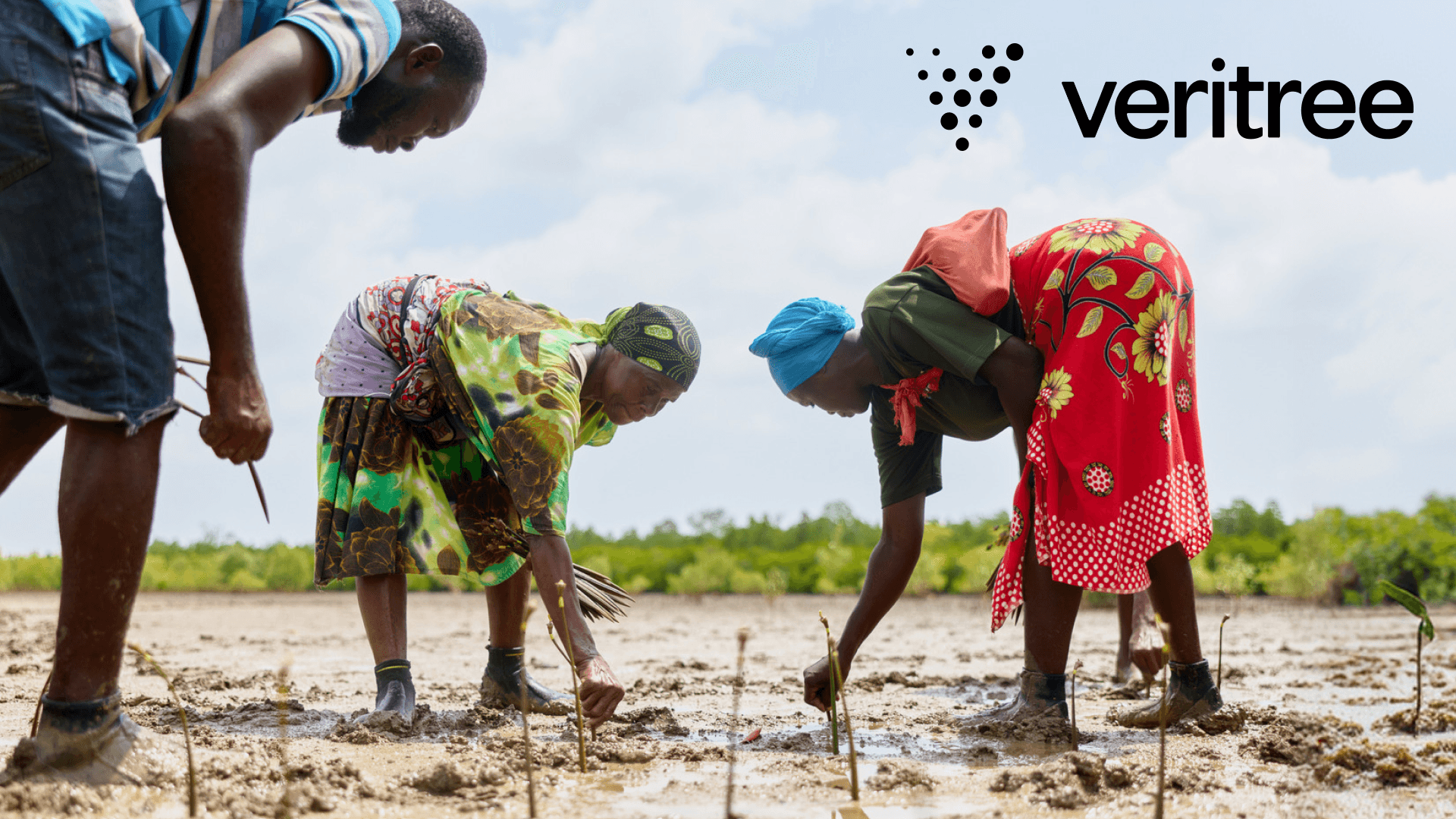
Our forests are getting an upgrade: neon green has a new tree-planting partner, veritree. From now on, every planting session is verified, tracked and traceable. Same place, more transparency: we're staying loyal to Tudor Creek in Kenya, where we've been planting mangroves for years.
Since the launch of neon green in 2021, we have been working with the tree-planting partner Eden: Planet + People. Over the last few months, Eden has fundamentally changed its approach: the focus is now on a few, centralised planting sites and carbon credit sales. Find out more here.
That's a legitimate development. But it doesn't fit with our approach: one tree for every 500 CHF a neon green user spends with the card. The good news: the local organisations that have been doing the actual work on the ground all along have taken over the care of these sites from Eden. We simply sought out a new partner who also works hand in hand with local communities and non-profits and takes tracking to a new level. Thanks to Eden for its long-standing pioneering work – and welcome, veritree.
Who is veritree?
veritree is a data-driven platform that connects nature-based solutions with businesses. Through on-site monitoring and multiple-step-verification, veritree improves transparency and trust – and revitalises ecosystems, strengthens communities and builds climate solutions.
In 2024, veritree celebrated the planting and verification of over 50 million trees – thanks to a growing network of partner companies worldwide. The goal: to plant over a billion verified trees by 2030. What makes it special: veritree emerged from the success of tentree, a clothing company that plants ten trees for every product sold. veritree is the technology platform behind it – and is now being used by neon green.
Why nature-based solutions matter
«Nature-based solutions» refer to measures that either prevent deforestation or enhance CO₂ sinks through afforestation and ecosystem restoration. According to the World Economic Forum and McKinsey, 2021 nature-based solutions could account for up to a third of the climate action required by 2030 to achieve a net-zero economy. According to the IPCC report 2023, these approaches are among the five most effective strategies for reducing emissions by 2030.
But impact without evidence doesn't go far. That's where veritree raises the bar – setting a new standard for how trees are tracked, verified and looked after over time. Read on to see how.
How verification of tree planting works
Verification takes place in three stages:
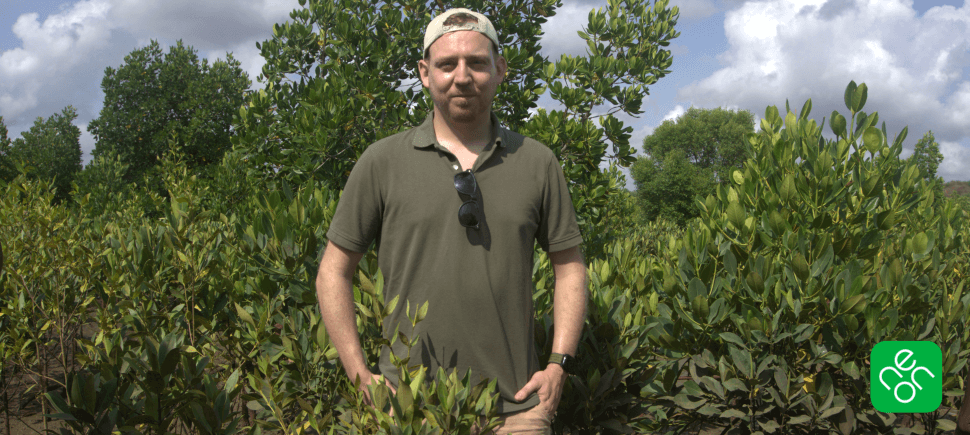
Level 1 – Planters in the field: Teams use the veritree app to record geotagged images, GPS planting routes and planting data for each session, along with all applicable evidence. Check out how plantings are verified using the veritree app in this video.
Level 2 – Site review: Planting site management (leads and supervisors) check the submitted data and evidence for accuracy and consistency.
Level 3 – Independent validation by veritree: All submitted data and evidence is analysed by veritree's internal machine learning algorithms to ensure accuracy – and that no tree is counted twice.
Once verified, the impact data is published online. This ensures traceability and guarantees that the data remains immutable.
How trees are kept alive
But verification doesn't stop once the trees are in the ground. Protecting the forest is critical in the first 3–5 years, when young trees are most vulnerable to animal damage or human intervention. veritree conducts survivability and growth progress checks post-planting. From year five onwards, satellite imagery is integrated to assess the ongoing health and growth of the forest.
Want to see what that monitoring looks like in practice? Check out this video. It shows how veritree uses ground cameras and drones to build highly detailed 3D models of the planting sites.
The veritree dashboard – more transparency for every tree
veritree provides a dashboard that shows the lifecycle or the tree orders, impact metrics and field reports in real time. For now, this dashboard is only visible internally to neon – but we'll regularly share reports we can pull from it with neon green users.
The lifecycle of your tree order
There's a lot that happens between you spending 500 CHF with your neon green card and a verified tree growing in the ground. Here's a quick overview of the journey:
Pending – Your tree order is on its way. Everything is being set up in veritree's system.
Site assessment – Teams explore potential locations to find the right spot for your new tree, collect baseline data, create a Smart Design plan and divide the land into smaller 'blocks' to guide planting.
Nursery & site prep – New planters are trained on the technology, staff are organised, site infrastructure is maintained, and nurseries coordinate saplings and propagules to make sure trees are ready for the field.
Planting – Planting partners head into the field. Using the veritree app, they take photos, record GPS information and track how many trees and which species are planted in each session.
Verifying – Planting partner teams and veritree review the session data through the three levels of verification. Once trees pass all three levels, they're officially yours.
The Impact Hub
Curious where your trees end up? You can already see our planting sites on the public veritree Impact Hub – including the trees previously planted through Eden.
Tudor Creek – our planting site in Kenya
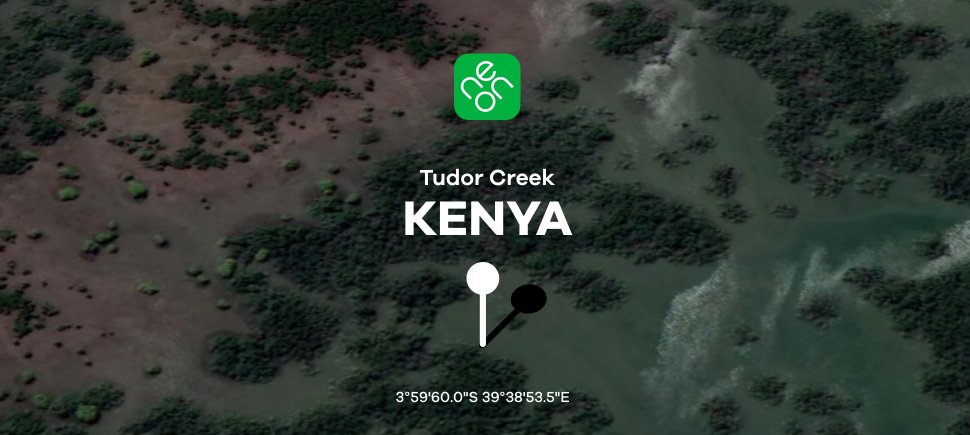
neon green continues to plant mangroves at Tudor Creek, Mombasa County, Kenya. What sets the site apart is its location – right next to Mombasa's old town – making it unique among mangrove projects in the country. For decades, these mangroves were severely damaged by over-harvesting for timber, land clearance for salt production, port development and oil spills.
Today, that's changing. Thanks in large part to the non-profit EarthLungs, the local organisation that has been on the ground at Tudor Creek for years and that veritree now partners with. Together, veritree and the EarthLungs Reforestation Foundation have restored over 3,200 hectares of mangrove forest in Kenya as well as Tanzania, planting more than 2 million mangroves per month.
EarthLungs and the communities behind every tree
EarthLungs teams visit randomised monitoring points, classify the status of each tree and upload the data via the veritree Collect app. The partnership has created stable employment for 258 full-time and 300 regular part-time positions – and was recognised by Kenya's Chief Conservator of Forests as the best work he has ever seen in the country.
The impact goes beyond trees. Through education and hands-on involvement in monitoring and reporting, local communities build a real sense of ownership over the forest – which is what keeps it not just alive, but thriving. EarthLungs has also integrated beekeeping into the communities: the hives boost pollination and reduce deforestation, while honey and beeswax sales generate additional income for families.
Want to read the full story of our neon forests’ development over the years? You can find it here.